Wuxi Dongsheng Spray Granulating Drying Machinery Factory! We are a seasoned professional manufacturer specializing in various types of spray dryers!
中文版
Hotline::+86-510-83382327


Product Overview
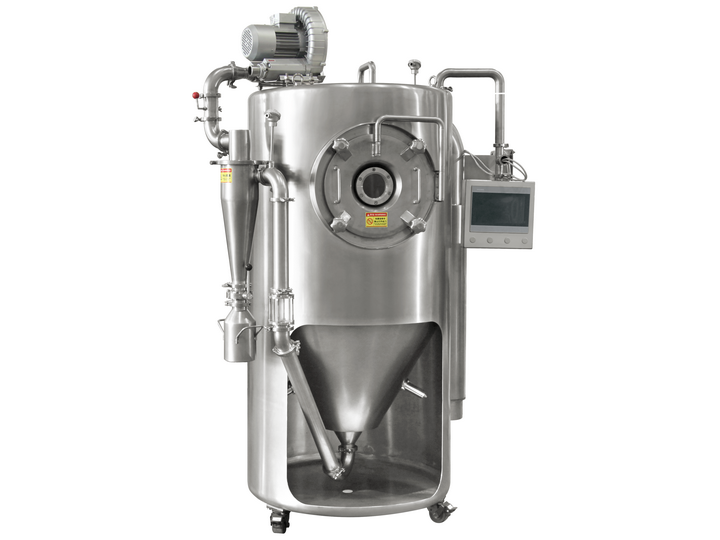
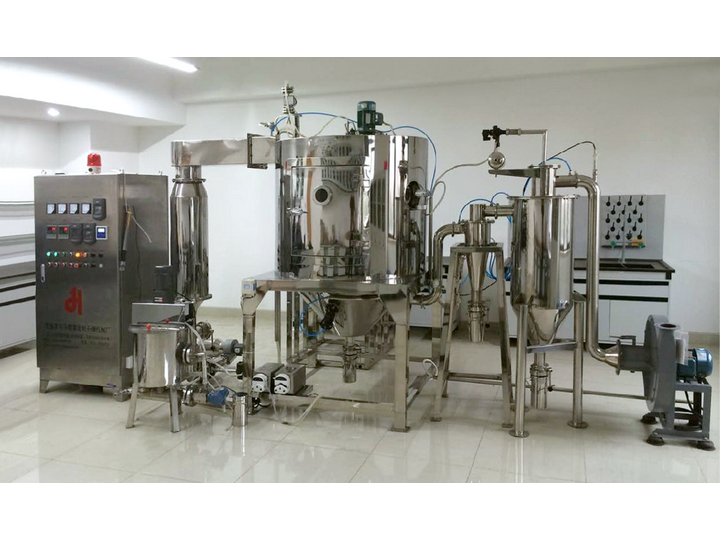
The laboratory two-fluid spray dryer, also commonly known as a pneumatic spray dryer, is a micro-scale particle and powder preparation device designed specifically for laboratory R&D scenarios. Its core feature is the use of a two-fluid (or twin-fluid) nozzle as the atomizer, with compressed air (or superheated steam) serving as the atomization power source. The equipment is usually compact in design, and its drying, separation, and collection systems are mostly made of high-quality high borosilicate heat-resistant glass, making the entire drying process transparent and visible for researchers to observe directly. It is widely used in laboratories of universities, research institutes, and enterprises in food, pharmaceutical, chemical, and other industries to explore optimal drying process conditions and provide direct data support for industrial production.
Overview
The laboratory two-fluid spray dryer, also commonly known as a pneumatic spray dryer, is a micro-scale particle and powder preparation device designed specifically for laboratory R&D scenarios. Its core feature is the use of a two-fluid (or twin-fluid) nozzle as the atomizer, with compressed air (or superheated steam) serving as the atomization power source. The equipment is usually compact in design, and its drying, separation, and collection systems are mostly made of high-quality high borosilicate heat-resistant glass, making the entire drying process transparent and visible for researchers to observe directly. It is widely used in laboratories of universities, research institutes, and enterprises in food, pharmaceutical, chemical, and other industries to explore optimal drying process conditions and provide direct data support for industrial production.
The working principle of the laboratory two-fluid spray dryer is based on the atomization of the feed liquid by high-speed airflow. Its core is the two-fluid nozzle. During operation, the feed liquid (solution, emulsion, suspension, etc.) is quantitatively delivered to the nozzle by a peristaltic pump, while compressed air generated by an air compressor is ejected from the nozzle at an extremely high velocity (up to over 200 m/s). When these two fluids meet at the nozzle, due to the huge velocity difference, powerful friction and shear forces are generated, instantly tearing and breaking the feed liquid into micron-sized fine droplets. After entering the drying tower, these droplets with a huge surface area come into co-current contact with hot air heated to 110–220°C by a heater, completing intense heat and mass exchange within an extremely short time (usually 1.0 to 1.5 seconds). Moisture evaporates rapidly, and the solid material is dried into powder. Finally, the dried finished product enters a cyclone separator along with the airflow for gas-solid separation. The powder is collected in a product collection bottle, and the exhaust gas is discharged after filtration.
The performance characteristics of the laboratory two-fluid spray dryer are mainly reflected in the following aspects: First, it has extremely wide material adaptability. It can not only handle low-viscosity solutions and emulsions, but is especially good at processing materials that are difficult to atomize, such as highly viscous, paste-like, and slurry-like materials—an advantage that many other types of equipment cannot replace. Second, drying is rapid and gentle. Due to the huge specific surface area of the droplets, drying is completed within seconds, and the material is exposed to heat only after atomization, resulting in instantaneous heating. This makes it highly suitable for drying heat-sensitive materials (such as biological products and enzyme preparations). Third, product quality is excellent. The resulting product is mostly spherical particles with uniform particle size, good flowability, and good solubility. Fourth, operation is flexible and precise. The equipment is usually equipped with PID constant-temperature control technology, with temperature control accuracy reaching ±1°C, and parameters such as hot air volume and feed rate are adjustable. However, its main disadvantage is that atomization requires a large amount of compressed air, resulting in relatively high power consumption.
The laboratory two-fluid spray dryer has a very wide range of applications, covering almost all industries that require micro-scale powder preparation during the R&D stage. In the food industry, it is commonly used for drying amino acids, seasonings, proteins, milk powder, tea powder, flavors and fragrances, etc. In the pharmaceutical industry, it is used for drying heat-sensitive components such as vitamins, antibiotics, enzyme preparations, biological products, and biological pesticides. In the chemical industry, it can be used for the development of products such as disperse dyes, catalysts, white carbon black, and detergent powder. In addition, it is also widely used for powder preparation in fields such as ceramic materials and plastic resins. In short, it can be found in almost all laboratory R&D scenarios that require rapid, micro-scale drying of solutions, suspensions, and even high-viscosity materials to obtain powder samples.

High-tech Enterprise
QMS Certified
SRMS Certified
Tel:+86-510-83382327 83382326 83390269
Mail:master@dspwgz.com
Add:eside Dengxiang Bus Station, Qianzhou Town,
Huishan District, Wuxi, Jiangsu, China.


Press & Hold to Scan,Follow our WeChat account.